Multi-Model Workflow Optimization with CCG
Strategies for coordinating multiple AI models (Claude, Gemini, Codex) to efficiently handle full-stack development tasks.
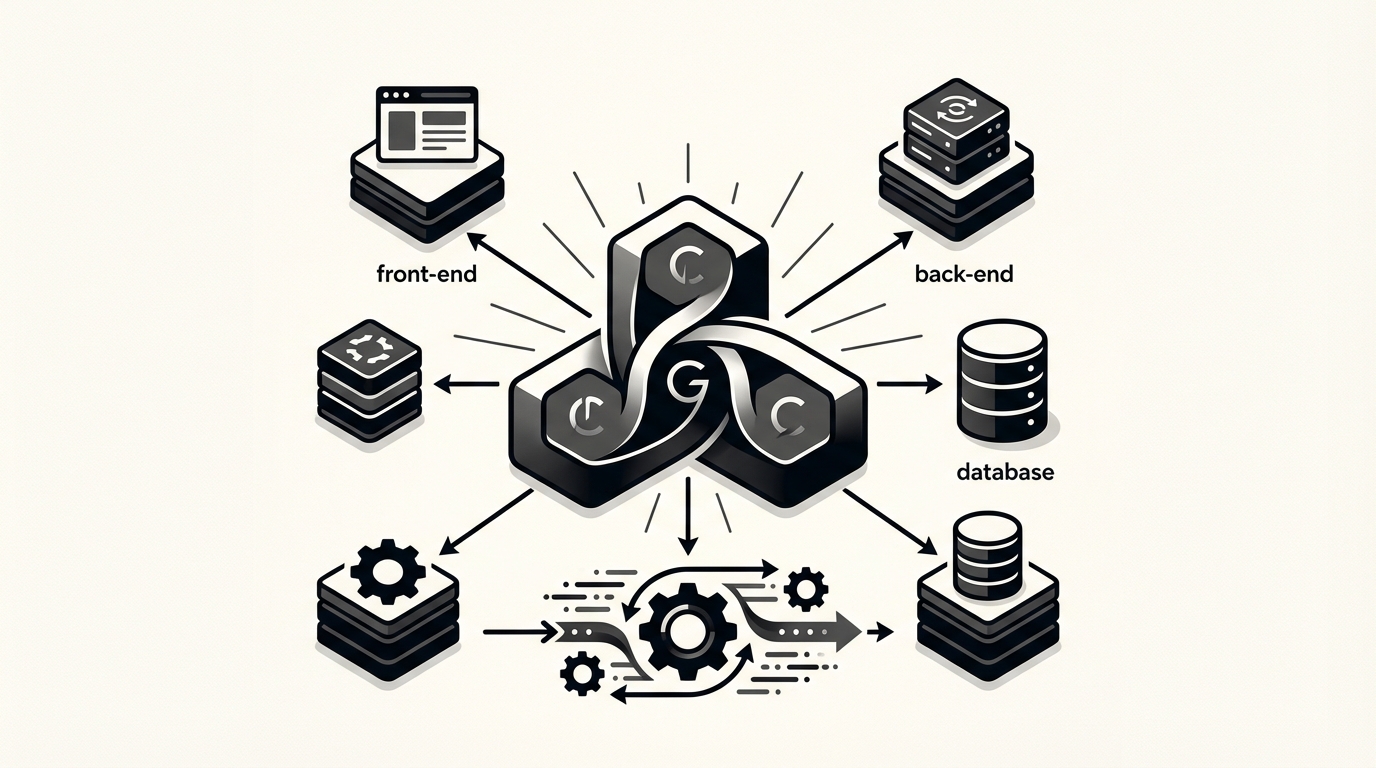
Stop Burning Tokens: How CCG Workflow Uses Multi-Model Collaboration to Supercharge Full-Stack Development
If you've ever tried to use Claude Code for a non-trivial full-stack project, you've probably hit the same wall: the token bill climbs fast, context windows get bloated, and asking a single model to juggle React components, REST APIs, database migrations, and DevOps configs all at once starts to feel like asking one developer to wear every hat simultaneously. The result? Slower responses, ballooning costs, and code quality that suffers when the model loses the thread of what it was doing.
There's a smarter way to approach this — and an open-source project called CCG Workflow is making it surprisingly practical.
The Problem with Single-Model Full-Stack Development
Modern web applications are not monolithic problems. The mental models required for pixel-perfect UI work are genuinely different from those needed for optimizing a database query or architecting a microservice. Yet most AI-assisted development workflows treat every task identically: dump it all into one context window and hope the model figures it out.
This creates several compounding inefficiencies:
- Token waste: A single model processing an entire full-stack task must hold both frontend and backend context simultaneously, even when only one domain is actively needed.
- Context dilution: The more unrelated code and instructions live in one context window, the more attention gets diluted across irrelevant details.
- Capability mismatch: Different models have different strengths. Using a generalist for everything means you rarely get specialist-level output for any individual domain.
- Cost unpredictability: Token consumption scales non-linearly when context windows swell with mixed-domain information.
This isn't a hypothetical concern — developers working on medium-to-large projects with Claude Code report that tokens can drain at an alarming rate when frontend and backend tasks are interleaved in the same session.
Enter CCG Workflow: Orchestrated Multi-Model Collaboration
CCG Workflow is an open-source project that reframes AI-assisted development as a collaborative multi-agent pipeline rather than a single-model monologue. The name itself is a hint: Claude, Codex, Gemini — three models, each assigned a role that aligns with its strengths.
Here's how the division of labor breaks down:
Claude — The Orchestrator
Claude sits at the top of the hierarchy, acting as the project manager and task router. When you describe a feature or a user story, Claude is responsible for:
- Breaking the task down into discrete frontend and backend subtasks
- Routing each subtask to the appropriate specialized model
- Synthesizing the outputs back into a coherent whole
- Maintaining overall architectural consistency
Claude's strength in reasoning, instruction-following, and structured output makes it well-suited for this orchestration role. It doesn't get bogged down in implementation details — it thinks at the system level.
Gemini — The Frontend Specialist
Frontend tasks — UI components, styling logic, responsive layouts, client-side interactivity — are routed to Gemini. This keeps the frontend context clean and focused. Gemini handles tasks like:
- Generating React or Vue components based on design specs
- Writing Tailwind CSS or styled-component logic
- Handling state management patterns
- Producing accessible, semantic HTML
By isolating frontend work in its own context, Gemini can apply full attention to UI concerns without being distracted by database schemas or API authentication logic.
Codex — The Backend Engineer
Backend tasks are delegated to Codex, which takes ownership of:
- API endpoint design and implementation
- Database models and migration scripts
- Business logic and service-layer code
- Authentication flows and middleware
Codex's training on large volumes of structured programming tasks makes it effective at generating clean, functional backend code. Keeping it focused purely on server-side concerns improves output quality and reduces hallucination risk.
How the Task Routing Mechanism Works in Practice
The magic of CCG Workflow lies in its task routing layer — a classification mechanism that automatically identifies whether an incoming task is frontend, backend, or a hybrid, and dispatches it accordingly.
Consider a real-world scenario: you're building a user dashboard feature that requires both a new React data visualization component and a new API endpoint to serve the chart data.
Without CCG Workflow, you'd paste this entire requirement into Claude Code and watch it attempt everything at once, shuffling between JSX and Python (or Node.js) in a single context.
With CCG Workflow, the pipeline looks like this:
User Request: "Build a sales dashboard with a bar chart and a /api/sales endpoint"
        │
        ▼
  Claude (Orchestrator)
  ├── Task A: "Create BarChart component using Recharts" → Gemini
  └── Task B: "Create GET /api/sales endpoint with date filtering" → Codex
        │
        ▼
  Gemini Output: BarChart.jsx  ←────────────────────────┐
  Codex Output: sales_router.py ←──────────────────────┤
        │                                               │
        ▼                                               │
  Claude: Integrate outputs, validate consistency ──────┘
        │
        ▼
  Final Deliverable: Coherent, integrated feature
This separation ensures that each model's context window contains only what's relevant to its domain, dramatically reducing token overhead while improving task-specific output quality.
Practical benefits developers have observed:
- Significant reduction in tokens consumed per feature relative to single-model approaches
- Faster iteration cycles because subtasks can potentially run in parallel
- Cleaner code with fewer domain-crossing inconsistencies
- More predictable cost per feature unit
Why This Matters for the Future of AI-Assisted Development
CCG Workflow represents a broader architectural shift worth paying attention to. As AI models become more specialized and the tooling around multi-agent systems matures, the most effective AI-assisted development workflows will increasingly look like distributed systems — not single-process scripts.
The analogy to human engineering teams is deliberate and instructive. You wouldn't ask your frontend engineer to also own your database infrastructure. The specialization that makes human teams effective applies equally to AI agent teams. CCG Workflow makes this intuition executable.
For developers building on top of platforms like OpenClaw or designing their own automation pipelines, the CCG approach offers a reusable pattern: route by domain, orchestrate by reasoning model, synthesize at the top. This pattern scales. Whether you're adding a design review agent, a security audit agent, or a documentation writer, the architecture accommodates expansion naturally.
Getting started is straightforward — CCG Workflow is open source, and the task routing configuration is designed to be legible and extensible for developers who want to customize domain boundaries or swap in different models as capabilities evolve.
Conclusion
Single-model AI development made sense as a starting point, but as projects grow in complexity, the cracks show quickly. Token costs spike, context quality degrades, and the output increasingly reflects the model's struggle to hold too many concerns at once.
CCG Workflow offers a practical, open-source answer: let Claude think big, let Gemini build beautiful, let Codex build robust — and let a clear routing layer keep everything coordinated. It's not just a workflow optimization; it's a glimpse at how professional AI-assisted development teams will operate by default in the near future.
If you're working on full-stack projects with AI assistance and watching your token usage climb, CCG Workflow is worth a serious look.
Source
Original post by @GitHub_Daily on X/Twitter: https://x.com/GitHub_Daily/status/2031362015865020757
Next Best Step
Keep this session moving with the AI Agent Workflows hub
This hub connects the orchestration, workflow, and build-story posts that already attract agent-centric traffic so we can turn that attention into deeper reading and skill installs.
See the AI agent workflows hub
Open the full cluster page for orchestration demos, workflow examples, and next-step tools.
Install Claude Flow
Turn workflow inspiration into an installable orchestration layer.
Browse the skills archive
Compare the tools that best fit your next workflow build.
Tags
Related Skills
Agentic Workflow Automation
Generate reusable multi-step agent workflow blueprints for trigger/action orchestration.
Happy Coder - Remote Claude Code Client
Open-source tool enabling remote access to Claude Code and Codex from mobile and web clients using CLI.
LiteLLM: Unified LLM API Interface Library
Open-source Python SDK providing unified OpenAI-compatible API for 100+ language model providers including Claude, Google, AWS, and Azure.
Related Articles
Essential Claude Skills Stack for AI Development
Personal collection of 5 useful Claude skills including UI design, SEO review, content creation, and image generation tools.
Claude Code Plugin Pairing: ralph-loop with planning-with-files
Experience sharing on combining Claude Code's ralph-loop plugin with skills/planning-with-files for task completion and progress tracking.
Building Commercial Apps with Claude Opus
Experience sharing on rapid app development using Claude Opus as a CTO, product manager, and designer combined.